 Vave
Vave- Coins
- 90
- Withdrawal limit
- from 50,000 USDT in instalments cl. 8.8
- Before ID check
- 180 USDT withdrawn, no ID askedtested by us
- Operator
- Latcas B.V.
- Welcome offer
- 150% up to 1.5 BTC
- Minimum deposit
- not published
- Games
- 2,500
- Studios
- 40
- Payments
- not published
- Wagering
- not published
- Licence
- Curaçao Gaming Authority
Identity thresholds
Identity checks move; the obligation stays put
Every operator whose terms were read here reserves an identity check somewhere in them. One of the ten prints the amount that triggers it — Bitcasino.io, 2,500 EUR, clause 6.6 — four more keep the trigger to themselves, and five went unread.
 Bitcasino.io
- Coins
- 12
- Withdrawal limit
- not published
- Before ID check
- 2,500 EUR
- Operator
- Moon Technologies B.V.
- Welcome offer
- 100% up to 1,500 USDT
- Minimum deposit
- 0.25 USDT
- Games
- 5,000
- Studios
- not published
- Payments
- BTC · ETH · LTC · USDT
- Wagering
- 30×
- Licence
- Curaçao Gaming Authority
 Wild Fortune
- Coins
- 10
- Withdrawal limit
- 22,500 AUD /month cl. 11.8
- Before ID check
- case by case
- Operator
- Metlait SRL
- Welcome offer
- 100% up to C$3,000
- Minimum deposit
- 20 EUR
- Games
- not published
- Studios
- not published
- Payments
- BTC · BCH · ETH · LTC
- Wagering
- not published
- Licence
- Anjouan Gaming Board
 Metaspins
- Coins
- 9+
- Withdrawal limit
- not published
- Before ID check
- case by case
- Operator
- Metaspins N.V.
- Welcome offer
- 100% up to 1 BTC
- Minimum deposit
- not published
- Games
- not published
- Studios
- not published
- Payments
- not published
- Wagering
- not published
- Licence
- Curaçao Gaming Authority
 Oshi Casino
- Coins
- not read
- Withdrawal limit
- not read
- Before ID check
- not published
- Operator
- Novatrix SRL
- Welcome offer
- not read
- Minimum deposit
- not published
- Games
- not published
- Studios
- not published
- Payments
- not published
- Wagering
- not published
- Licence
- Anjouan Gaming Board
 PlayAmo
- Coins
- not read
- Withdrawal limit
- not read
- Before ID check
- not published
- Operator
- Novatrix SRL
- Welcome offer
- not read
- Minimum deposit
- not published
- Games
- not published
- Studios
- not published
- Payments
- not published
- Wagering
- not published
- Licence
- Anjouan Gaming Board
 Bitdreams
- Coins
- not read
- Withdrawal limit
- not read
- Before ID check
- not published
- Operator
- not published
- Welcome offer
- not read
- Minimum deposit
- not published
- Games
- not published
- Studios
- not published
- Payments
- not published
- Wagering
- not published
- Licence
- Curaçao Gaming Authority no number
 Bitsler
- Coins
- not read
- Withdrawal limit
- not published
- Before ID check
- case by case
- Operator
- Oyine N.V.
- Welcome offer
- 200% up to $2,000 or 100% up to $1,000
- Minimum deposit
- 5 USD
- Games
- not published
- Studios
- not published
- Payments
- crypto from a wallet or exchange · connected exchange account · card purchase of crypto (ID required) · fiat deposit
- Wagering
- not published
- Licence
- Curaçao Gaming Authority
 CoinCasino
- Coins
- not read
- Withdrawal limit
- not read
- Before ID check
- not published
- Operator
- Igloo Ventures SRL
- Welcome offer
- not read
- Minimum deposit
- not published
- Games
- not published
- Studios
- not published
- Payments
- not published
- Wagering
- not published
- Licence
- Anjouan Gaming Board
 CryptoLeo
- Coins
- not read
- Withdrawal limit
- not read
- Before ID check
- not published
- Operator
- Uno Digital Media B.V.
- Welcome offer
- not read
- Minimum deposit
- not published
- Games
- not published
- Studios
- not published
- Payments
- not published
- Wagering
- not published
- Licence
- Curaçao Gaming Authority
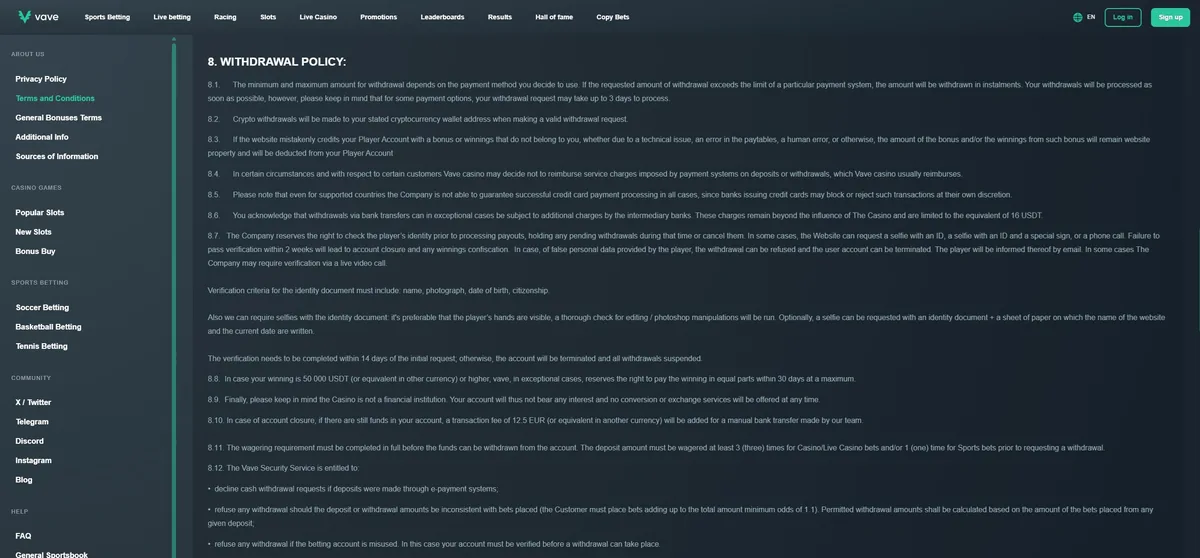
We deposited here. Every other cell in this row comes from Vave’s own terms, section 8, read on 25 August 2026 — and those terms publish no amount at which an ID check starts. Clause 8.7 lets the operator ask before any payout, at its own discretion. So this cell is the one figure on the page that comes from a test rather than a document. On 28 August 2026 the editorial team deposited 60 USDT on TRC20, played, and withdrew 180 USDT to the same network. No ID was asked for. That is one test at one amount on one day, not a promise the operator will do the same for you, and clause 8.7 still allows the request on any withdrawal.
The phrase names a search, not a product
People search for no kyc casinos when they want a cashier that never asks for a passport or a utility bill. The phrase no kyc casino carries the same assumption, and no kyc casino australia adds a jurisdiction while leaving the obligation where it was. The site reads terms and conditions rather than marketing copy, and in those documents a missing check turns out to be either a timing decision or a threshold left unpublished.
An operator can delay identity collection without removing the obligation. A terms clause may say verification happens ‘at any time’, ‘before a first withdrawal’, or ‘when total withdrawals reach a stated amount’. A listing that styles itself as a no kyc casino is usually describing a delay rather than a legal absence. The difference matters because a delayed check still affects when money can move.
A missing threshold is evidence of one thing only: the operator kept the trigger to itself. A reader who treats silence as safety has misread the document. The more useful question is where the check sits, since the obligation to verify stays with the operator wherever it places the request; how Australian law applies is covered on what the Act binds.
Signup checks set the earliest gate
Some operators request a name, address and date of birth at account creation, then require a scan of a government document before the first deposit clears. The clause sits under headings like ‘Account verification’ or ‘Customer due diligence’. Where that clause exists, the check works as an entry condition rather than a withdrawal condition. An entry condition and a withdrawal condition go into different columns, which is how checks are recorded for the bitcoin casinos in Australia on the table.
A signup check can feel heavier than a withdrawal check because it occurs before any value is in the account. The operator collects the same categories of information: identity, age, residential address, and sometimes source of funds. What changes is the point in the customer journey where the document request appears. The cashier page explains what movement looks like after that gate.
From the reader’s perspective, a signup check is the easiest to verify before depositing. Either the terms require documents at registration or they stay silent. Silence there points to a check placed later in the process rather than to a check removed. A threshold placed at signup is the most visible version of the obligation.
First withdrawal is the common gate
Most operators in this market leave the document request until a player asks to take money out. The clause usually appears in the withdrawal section and reads close to: withdrawals are processed once identity is verified. That placement changes the risk profile: a deposit is accepted quickly, but a payout is paused.
The reason for the delay is operational. An operator can accept a deposit on limited information, while paying money out is the step its anti-money-laundering policy is written around. Each operator therefore picks its own verification moment, balancing signup friction against checks at withdrawal.
A reader looking for no kyc casinos often misses this timing. The search phrase assumes the document request was abolished, when it was merely postponed to the moment the reader wants their money. The withdrawal process page sets out what that request initiates.
Cumulative thresholds hide in the fine print
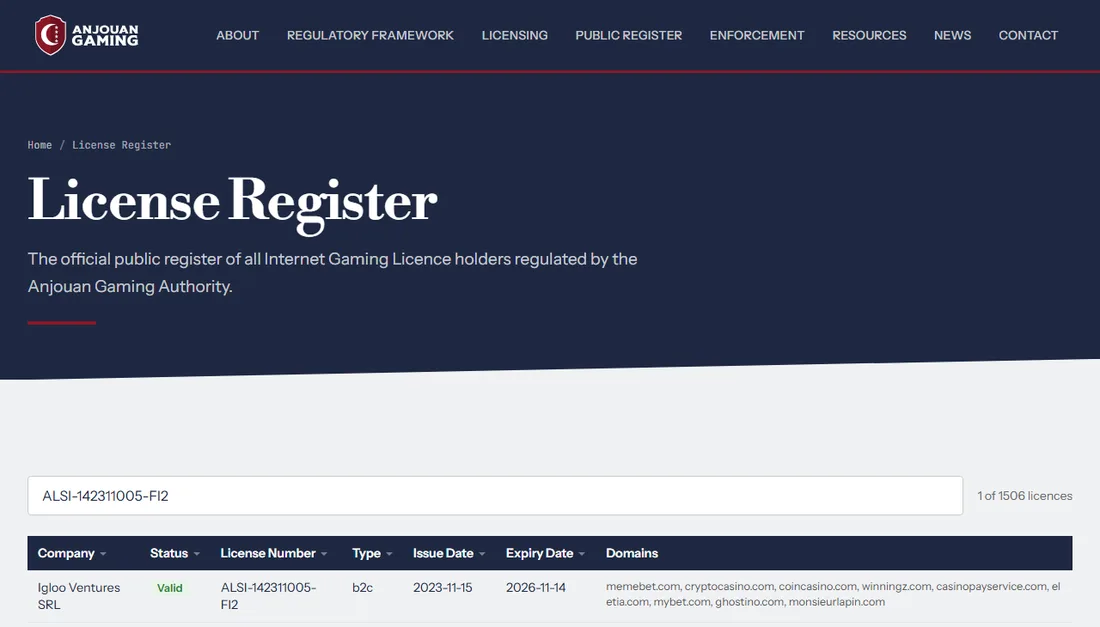
A smaller group attaches the check to a cumulative amount rather than to the first withdrawal. Bitcasino.io is the only operator on this table that states one: clause 6.6 sets it at 2,500 EUR or the equivalent in cryptocurrency. Read the rest of that clause too. It reserves verification of smaller withdrawals as well, and a separate clause, 3.13, layers on random Account Health Checks that need no trigger and can restrict deposits, play and withdrawals while they last. A published threshold is a floor for planning rather than a ceiling on the operator.
Metaspins shows the same rule with the figure removed. Clause 9.7 requires verification once gambling reaches a certain threshold, and the terms decline to say what that threshold is. That sentence is worth more attention than a blank cell, because it confirms a trigger exists and withholds only its size. Wild Fortune goes further in the other direction: clause 2.7 blocks deposits and bets outright for Bitcoin players until documents are supplied, which turns the check into an entry gate for one funding method and leaves it at the exit for every other.
Where the amount is missing, the careful sentence is that the threshold is unpublished rather than absent. Terms that keep the figure private let the operator apply it however and whenever it likes, so silence deserves the same attention as a stated number, and a comparison that scores a blank as generous has it backwards. The bonus reading guide shows the same pattern in the wagering terms, and the phone page covers what the document request looks like on a small screen.
What the reader should check before a deposit
The first document to open is the terms page rather than the review summary. Look for the clause that says when identity documents are requested. If the clause sits in the withdrawal section, the check is a payout gate. If it sits in the registration section, the check is an entry gate. Where the clause is missing, treat the check as unstated rather than abolished.
Read the sentence that follows it too. Three operators here attach a deadline to the request once it is made — 14 days at Vave, two weeks at Wild Fortune, 30 days at Metaspins — and document deadlines sets out what each says happens when the window closes.
The second check is the cumulative condition. Some terms tie verification to a total amount, and that amount can be expressed as a single figure or as a range depending on payment method. Where the figure is missing, assume the operator can introduce one at any time, since the terms usually reserve a request at their own discretion. This is also the column where a Australian crypto casino comparison most often shows a gap, because Bitcasino.io alone prints the amount.
The third check is the operator's restricted-country clause; four of the ten have been read, Wild Fortune clause 2.4 names 47 territories, Vave's remains a blank beside five unread, and the rows are compared on what the Act binds. A document request may also interact with withdrawal ceilings, because a threshold often appears beside a ceiling clause.